
Clerkenwell Design Week always sparks good conversations. With office leases getting shorter and sustainability pressure mounting, having these discussions felt more important than ever. Here’s what stood out, and what it means for how we think about workplace design.
1. “Sustainable design” isn’t enough anymore—circularity is the real test
Plenty of offices now tick the sustainability box at fit-out. Recycled materials here, a BREEAM rating there. But the harder question, the one that kept coming up this week, is what happens after. When the lease ends, when the company downsizes, when the brief changes—does it all go to landfill?
Real circularity means designing for the end from the beginning. That’s a different mindset entirely, and it’s one that Welltek embodies through our products and services.
2. Pods aren’t just a privacy solution—they’re a circular investment
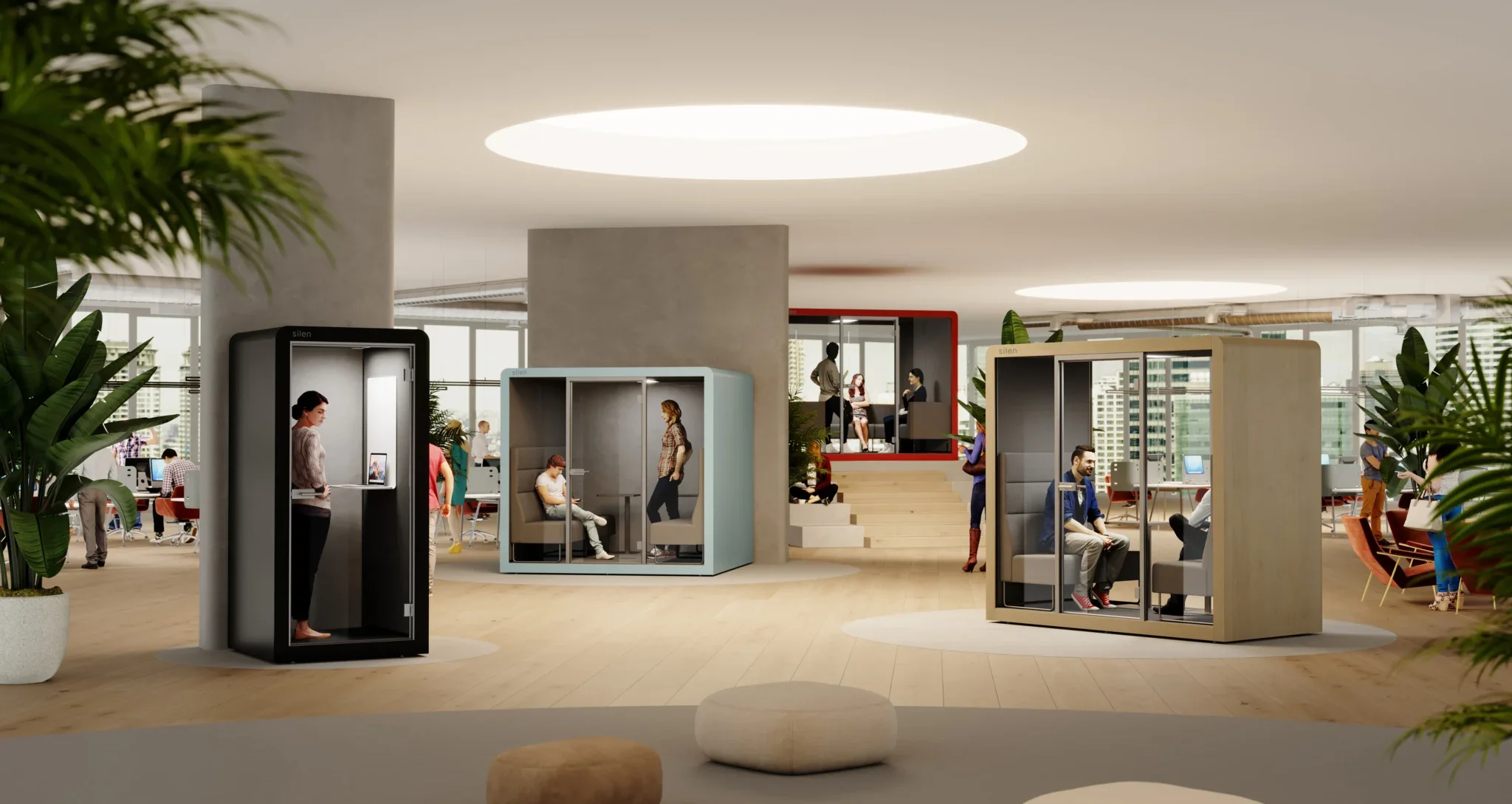
When we launched the Silen Space Gen 2 acoustic pod range at CDW this week, there were many compliments about the level of comfort, attention to design, details and the acoustic performance. People “felt” the level of sound blocking when the door closed. But the question a lot of people asked was “what happens if we move?”
The Space Gen 2 is designed for disassembly. It’s engineered to be relocated, reconfigured, and reused, rather than discarded at the end of a lease. In a market where UK office leases keep shrinking, a pod that can move with you isn’t a luxury, it’s a necessity.
And for organisations that don’t want the asset commitment, Podrent, our dedicated pod rental service, means you get Class A acoustics and premium workspace without the long-term liability. Scale up, scale down, hand it back. Nothing ends up in a skip.
3. The deposit scheme changes the relationship between product and waste
One of the most practical things we’ve introduced is a deposit scheme on pods. The idea is simple: when you’re done with it, it comes back to us. We refurbish it, and it goes back out into another workspace.
This isn’t greenwashing—it’s a logistics commitment. It means we’re accountable for the full lifecycle of the product, not just the sale. And it means clients can buy with confidence that they’re not just pushing waste down the road. It can also contribute to your carbon footprint goals and be highlighted in your sustainability report.
4. Your chairs and carpet tiles probably don’t need replacing—they need remanufacturing
Most office refurbishments involve perfectly functional task chairs and carpet tiles being tossed simply because the fabric is tired or the office is moving. Our furniture remanufacturing business, Encore by Design, changes that.
Through our partnership with Orak, we run a take-back and deep-clean programme that uses a water-tunnel to clean and restore 300m² of carpet tiles per day. Those tiles then go back into commercial spaces through our second life marketplace, keeping them out of landfill entirely.
The same goes for office chairs. Encore remanufactures existing chairs, cleaning, reupholstering, and restoring them without introducing new components wherever possible. The result is some of the lowest CO₂ impacts in the market, and a chair that looks and feels brand new.
Through Encore, we give these products new life, aligning directly with the principles of circular design.
5. Data is the missing piece, and it must be used intentionally
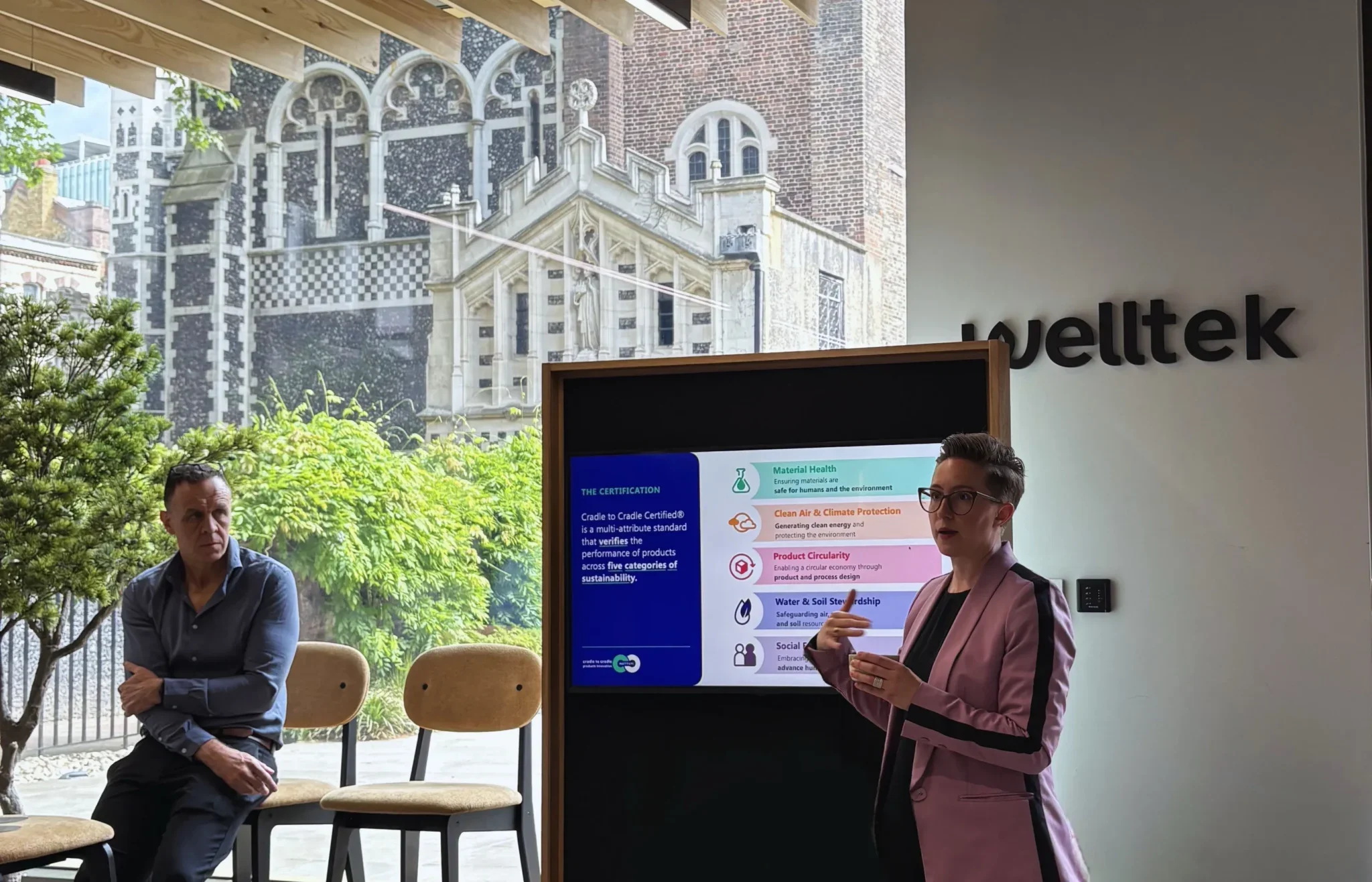
During her CDW talk at our showroom, Ren DeCherney, Director of Built Environment at Cradle to Cradle made a point that stuck: garbage in, garbage out. AI and data tools are only as good as the information you feed them. In the built environment, that data can be incomplete, inconsistent, or introduced too late to matter.
The real shift is bringing sustainability and circularity into the conversation at the start of a project, not as a retrofit. That means briefing contractors on your sustainability requirements before work begins, not auditing against them afterwards. It also means investing time in actually understanding what the data is telling you, instead of just collecting it for a report.
Circularity doesn’t happen by accident. It happens when the right information is in the right hands at the right moment. That’s why at Welltek, sustainability and circularity is at the core of our mission from start to finish.
The bottom line
Circular workspaces aren’t a trend. Pushed by shorter leases, tighter sustainability mandates, and clients who are asking better questions, it’s the direction the whole industry is heading.
At Welltek, everything we do, from pod rental and deposit schemes to chair remanufacturing and second-life carpet tiles, is built around one idea: good design shouldn’t end up in landfill.
If you didn’t make it to CDW this year, our showroom at 53 Little Britain is open year-round. Book a visit and come and see what circular workplace design actually looks like in practice!

