
A furniture deposit scheme, sometimes called a buy-back programme, lets you recover a guaranteed percentage of what you paid, at a pre-agreed point in the future, simply by returning the furniture to the supplier. You get money back rather than spending more to get rid of something you no longer need.
It’s a concept that’s been standard practice in other industries for years. In the office furniture sector, it’s still relatively new, which means most procurement teams haven’t encountered it yet, and many businesses are still writing off assets that could have retained real value.
So how does it actually work?
A deposit scheme is an agreement made at the point of purchase, not after the fact. When you buy eligible furniture, you register it in the programme. In return, the supplier commits to repurchasing it from you at a set future date, at a guaranteed percentage of the original purchase price.
The key word there is guaranteed. This isn’t a “we’ll see what condition it’s in and make you an offer” arrangement. The buy-back values are fixed before you sign anything, so you can build them into your asset planning from day one.
It’s worth being clear about what this isn’t. It’s not a lease you own the furniture outright and use it exactly as you would any other purchase. It’s not a rental agreement with strings attached. And it’s not contingent on market conditions or the supplier’s commercial situation at the time you want to return the pieces. The value is locked in.
How the Welltek buy-back programme works
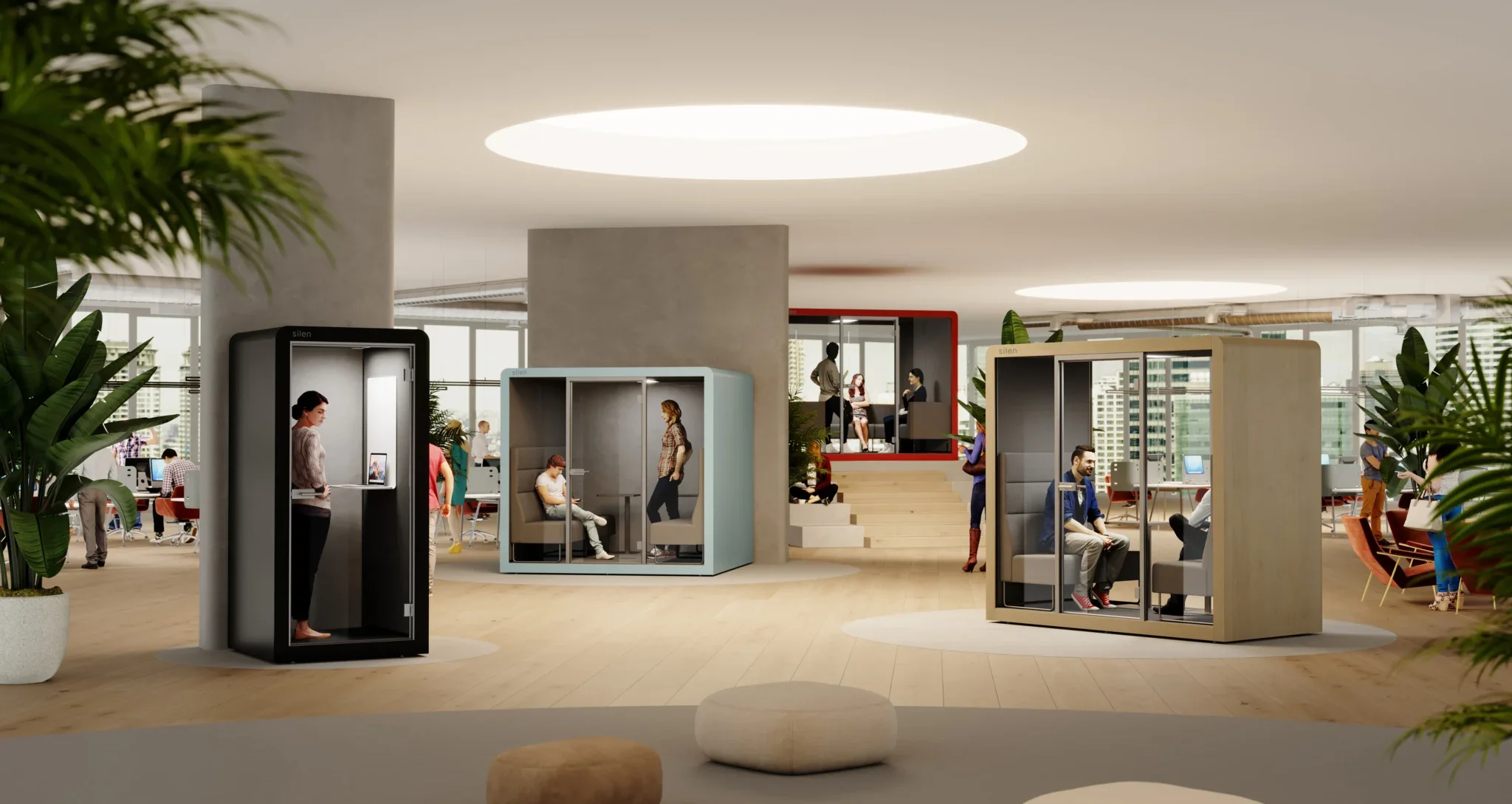
At Welltek, we operate a Buy-Back and Circular Upgrade Programme that currently applies to Silen New Generation Acoustic Pods — one of the most specified acoustic pod ranges in the UK market, and a product we sell and support directly as the official UK reseller.
The buy-back structure is straightforward. From Year 3 onwards, registered pods qualify for a guaranteed repurchase based on their original purchase price:
Year 3 — 25% of the original purchase price
Year 4 — 15% of the original purchase price
Year 5 — 10% of the original purchase price
To take part, pods need to be registered in the programme at the time of purchase. When you’re ready to return them, three months’ notice is required. The pods need to be in good working condition, with no structural damage, fully operational electrical components, though normal wear and tear is accepted. Collection and removal are handled by our authorised installation team; collection costs may apply or be offset against the buy-back value.
What happens to the pods once they leave you? They don’t go to a skip. Returned units enter our shared UK circular stock pool, where they are either resold to distributors or export markets, refurbished and given a second life, or deployed into our rental fleet. Every approved second-life product carries a new one-year guarantee — so the next user gets a reliable product, and the pod’s useful life is significantly extended.
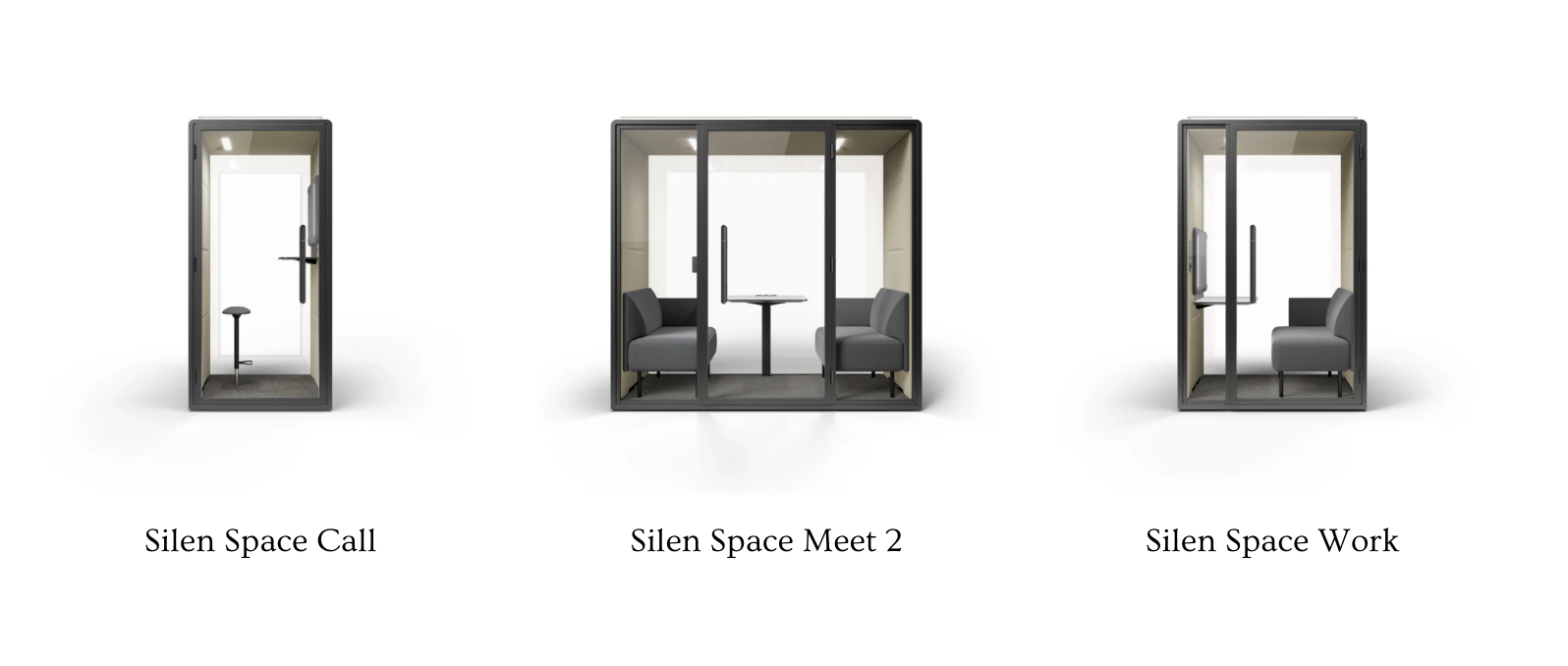
Recommended products
What does this mean financially?
Let’s make it concrete. Say your business purchases two Silen pods. You register them in the buy-back programme at the time of purchase. Three years later, your lease is up and you’re moving to a serviced office that already has meeting rooms. Instead of arranging disposal which costs money and management time — you give Welltek three months’ notice and return both pods.
You receive a payment equal to 25% of the original purchase price. That goes straight back into your budget toward the fit-out of the new space, toward replacement furniture, or simply back into the business.
Three things happen simultaneously that don’t happen with a standard purchase:
You recover a real sum of money at a point when you’d otherwise be spending, not receiving. The net difference between “standard purchase, write off at Year 3” and “deposit scheme purchase, buy-back at Year 3” is significant when applied to items of this value.
You have certainty from day one. Capital expenditure decisions are easier when you know the residual value of what you’re buying. Finance teams and CFOs tend to respond well to asset planning that includes a defined exit value – it’s the same logic that makes operating leases attractive, but without the restrictions of a lease structure.
You eliminate a hidden liability. Commercial furniture disposal isn’t free. Depending on the volume and location, removal costs can add up. The buy-back programme removes that liability entirely.
Why this matters for your ESG reporting
For a growing number of UK businesses, environmental and sustainability commitments aren’t just aspirational — they’re baked into supplier requirements, investment criteria, and annual reporting. If your organisation has net zero targets, a sustainability policy, or Scope 3 emissions obligations, the way you procure and dispose of office furniture is more relevant than it might seem.
Scope 3 emissions cover the indirect carbon impact of your business activity — including the goods and services you purchase. Buying new furniture has an embodied carbon cost. Sending it to a landfill at the end of its life adds more. A buy-back scheme addresses both ends of that equation: the product has a longer total life, and when it leaves your business, it goes into reuse rather than waste.
There’s also a reporting angle. If you’re completing sustainability questionnaires as part of procurement tenders, or producing an annual ESG report, being able to demonstrate that major asset purchases have a defined, verified circular end-of-life route carries genuine weight. “We returned the pods to the manufacturer for reuse” is a much stronger statement than “we arranged disposal.”
The Welltek programme is structured around genuine circular economy principles returned pods are refurbished and redeployed, not broken down for parts or sent abroad without accountability. That distinction matters if you’re making claims in a public-facing sustainability report.
Is a deposit scheme right for your business?
This model works particularly well for certain types of organisations. If you’re buying two or more acoustic pods, if your business operates on a lease cycle of three to five years, or if you have active ESG reporting commitments, the buy-back programme is likely to add real value to your purchase decision.
It’s also well-suited to businesses that know their space requirements might change. Rather than locking into an asset you’re uncertain about, you have a built-in mechanism to exit cleanly and recover value when your needs shift.
If you need maximum flexibility from the very start for example, if you’re not sure how long you’ll be in a given space, or if you want to scale up or down at short notice our Furniture on Subscription service may be a better fit. That model lets you rent acoustic pods and other furniture on flexible terms without a purchase commitment. The two services serve different circumstances, and we’re always happy to talk through which makes more sense for your situation.
A different way to think about office furniture
The standard model for office furniture procurement hasn’t changed much in decades: buy it, use it, dispose of it. The deposit scheme is a different mental model, one where furniture is a managed asset rather than a consumable, with a defined lifecycle and a recoverable value at the end of each chapter.
For businesses buying quality products like Silen pods, that shift in thinking makes financial sense. It also happens to be better for the environment and increasingly, those two things are pulling in the same direction.
If you’re planning a purchase and want to understand whether the buy-back programme applies, we’re at 53 Little Britain, EC1A 7BH or you can book a showroom visit to see the Silen range in person and talk through the programme in more detail.
Welltek Group is the official UK reseller of Silen acoustic pods. The Buy-Back and Circular Upgrade Programme is available on Silen New Generation pods purchased and registered through Welltek. Full programme conditions apply.
