
A practical guide to matching your workspace to the way people really work — and how to get there without overspending.
Activity-based working (ABW) is a design philosophy. Instead of assigning every person a fixed desk, ABW provides a range of settings — focus zones, collaboration spaces, social areas, private enclaves — and trusts people to move between them as their work shifts. Done well, it makes offices more human, more productive, and considerably more efficient. Done badly, it’s just hot-desking with a rebrand.
The difference, in large part, comes down to furniture. Here’s what you actually need — and what you don’t.
Start with the activities, not the products
Before specifying a single chair, map the real activities that happen in your office. Most workplaces have four broad modes:
Focused work — individual tasks requiring concentration, minimal interruption
Collaboration — team discussion, ideation, workshops, project work
Communication — calls, video meetings, one-to-ones
Socialising and informal exchange — the corridor conversations that actually move things forward
Your furniture mix should reflect roughly how much time your people spend in each mode. A software company full of deep-focus engineers needs a very different ratio from a creative agency, where almost everything happens in teams.
With that in mind, here are the furniture categories that do the heavy lifting in an ABW office — and what to look for in each.
1. Acoustic pods: the unsung hero of ABW
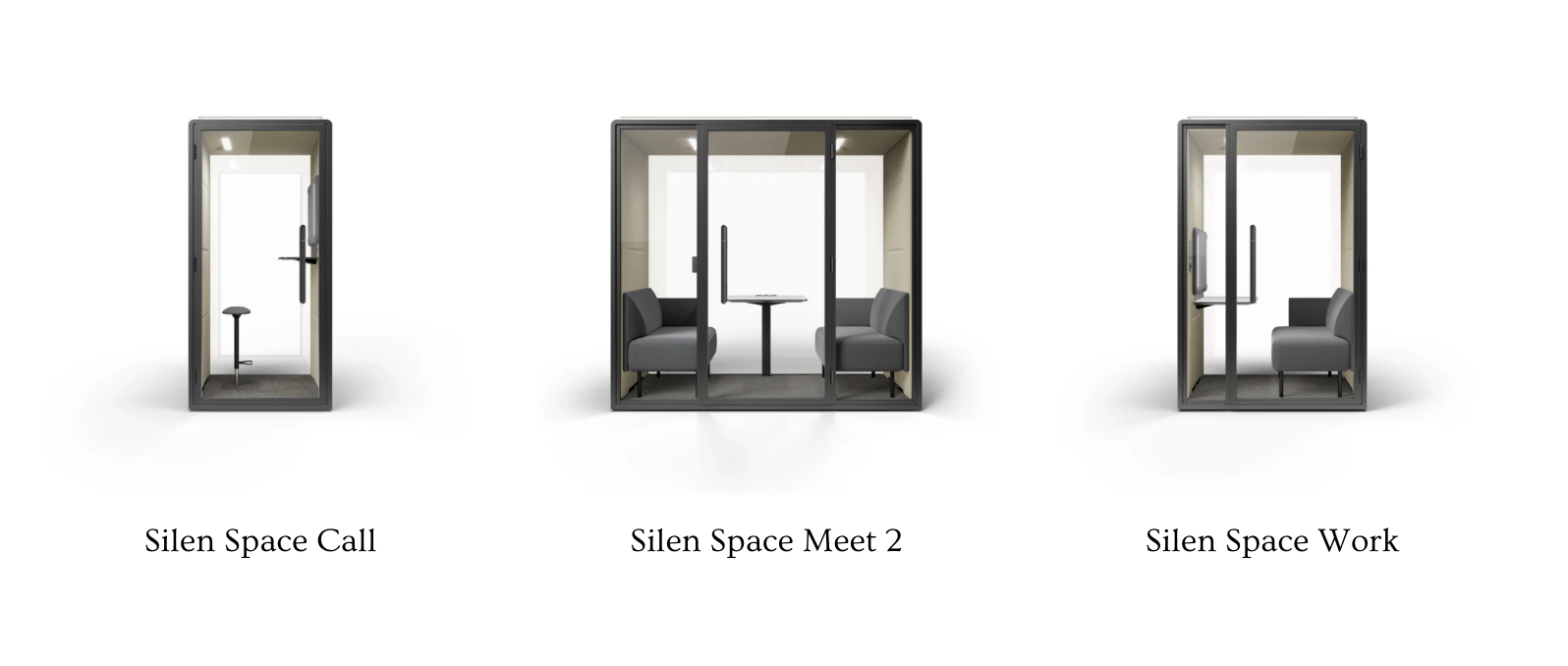
If there’s one piece of furniture that makes activity-based working function in practice, it’s the acoustic pod. Without private, enclosed spaces, your open-plan office simply becomes a noise problem that people solve by working from home.
Pods serve a few distinct purposes: solo focus work with genuine quiet, confidential calls without retreating to a meeting room, video calls without inflicting your screen on everyone behind you, and impromptu one-to-ones that don’t need a booked room.
Look for pods with strong acoustic attenuation (at least 30dB reduction is a practical benchmark), adequate ventilation, integrated power and USB, and good lighting. Size matters too — single-person booths for solo calls, two-to-three-person configurations for small team huddles.
The Welltek approach: Rather than committing to a large capital purchase, Welltek Group offers office pod rental, which makes pods accessible without a hefty upfront investment. This is particularly valuable if you’re piloting ABW in part of your office, or if your headcount fluctuates and you’re not sure how many pods you’ll need long-term. Renting also means you can swap configurations as your needs change — a two-person pod this year, a four-person collaboration unit next year.
2. Task chairs: don’t skimp here
The ergonomic task chair is the piece of furniture that takes the most punishment in any office, and in an ABW environment it’s used by multiple people across the day. That changes the calculus considerably.
A fixed-desk chair can be set up for one person and left. A shared task chair needs to adjust quickly, intuitively, and reliably — seat height, lumbar support, armrests — so that anyone sitting down can get comfortable in under a minute without reading a manual. Look for chairs with tool-free adjustments, durable mechanisms designed for multi-user environments, and covers that clean easily.
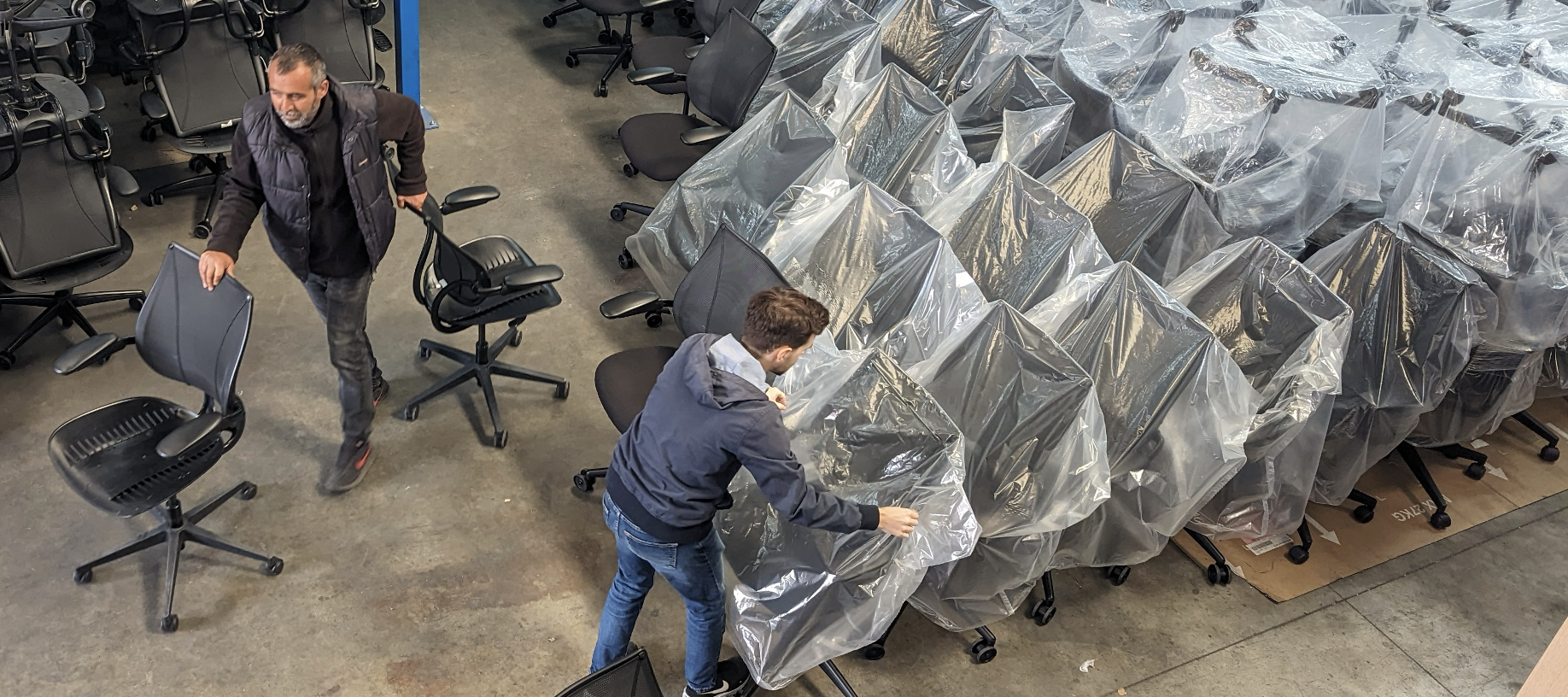
The sustainability angle matters here too. Premium task chairs — the kind from Herman Miller, Humanscale, Steelcase, and comparable manufacturers — are built to last decades. Yet most offices replace them on a five-to-seven-year cycle regardless of condition, because they look tired or the company wants a refresh.
The Welltek approach: Welltek Group’s chair remanufacturing service is one of the smartest ways to approach this in an ABW context. Rather than buying new task chairs outright, remanufactured chairs — fully refurbished, re-upholstered, and restored to manufacturer specification — deliver the same ergonomic performance at a fraction of the cost and with a dramatically lower carbon footprint. For a fifty-seat ABW office, the savings over buying new are significant. And if you’d prefer to spread the cost further, Welltek’s furniture subscription model lets you access high-quality task seating on a recurring basis, swapping out or scaling as your office evolves.
3. Sit-stand desks: focused zones that actually work
Hot-desking’s bad reputation usually comes from providing nothing but rows of identical fixed desks. ABW focus zones should be different: well-separated, acoustically considered, and ergonomically equipped.
Sit-stand (height-adjustable) desks are worth including in your focus zone, particularly for staff who spend long stretches doing concentrated work. Look for desks with reliable motors and a sensible height range. In shared environments, programmable presets aren’t necessary — simple up/down controls are faster and harder to break.
The Welltek approach: As with chairs, Welltek’s desk remanufacturing service applies the same principle to height-adjustable desks — restoring quality frames and worktops to full working order, and re-sizing rather than disposing where possible. Given that the mechanisms in a good sit-stand desk can last well over a decade, remanufacturing makes particular sense here. Welltek’s subscription offering also extends to desks, letting growing businesses add or rotate stock without large one-off purchases.
4. Modular collaborative seating
Collaboration zones are where ABW offices tend to either shine or fall flat. Fixed sofas and lounge chairs look great in a showroom but become obstacles the moment teams want to work together properly — there’s nowhere to put a laptop, no way to face each other, and the height difference makes conversation awkward.
Modular seating systems solve this. Look for units that reconfigure easily — from a casual lounge layout to a more structured workshop arrangement — with integrated surfaces, power access, and acoustic backing panels where possible. Booth configurations (high-backed, semi-enclosed) are particularly effective because they create informal privacy without requiring a booked room.
For standing collaboration and quick team check-ins, tall poseur tables with bar-height stools complement the lower seating mix and discourage meetings from running longer than they need to.
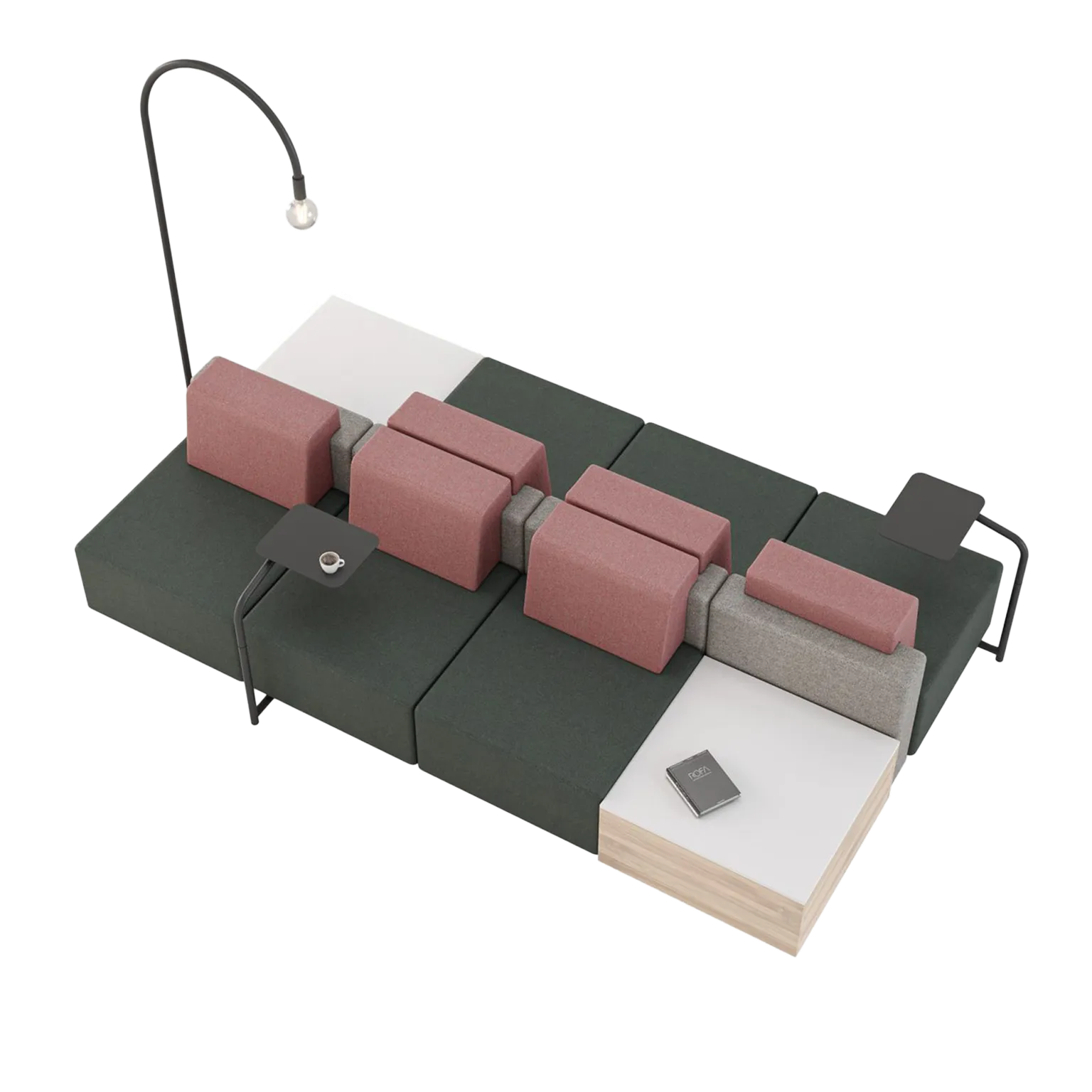
The Welltek approach: At Welltek Group, we favour modular soft seating solutions that allow workplaces to evolve alongside changing teams, working styles, and spatial requirements. Flexible systems give organisations the ability to easily reconfigure layouts for collaboration, focus, or social settings without replacing furniture entirely, supporting both agility and long-term value. We also prioritise suppliers who offer replaceable upholstery covers without requiring products to be returned to the factory, extending product lifespan and reducing waste. A strong example is the Rofa Moduplus Sofa system, which combines modularity with easily refreshable upholstery to support more sustainable, future-ready workplace design.
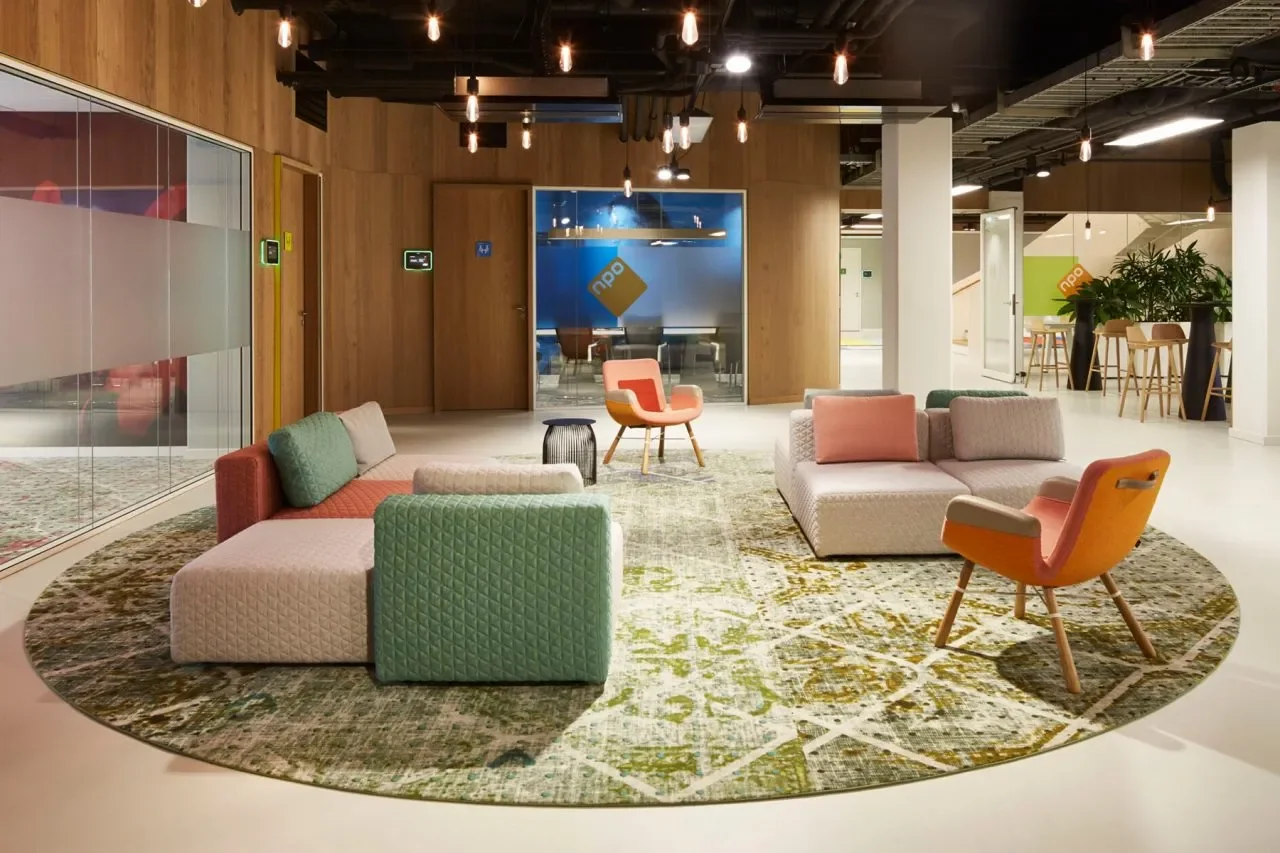
5. Breakout and social furniture
The social zone — kitchen area, informal breakout, café-style seating — often gets treated as a design afterthought, finished with whatever budget remained. This is a mistake, particularly in ABW offices, because the informal exchange that happens here is genuinely productive. It’s where the quick decisions get made, where junior team members absorb culture, and where remote workers reconnect when they come in.
Invest in comfortable, durable seating that invites people to linger but doesn’t swallow them (deep, low sofas make it hard to hold a working conversation). A mix of heights — standard tables, poseur tables, counter seating — keeps the space flexible. Soft surfaces, rugs, and acoustic panels reduce the echo that café-style hard floors and ceilings create.
6. Storage and personal lockers
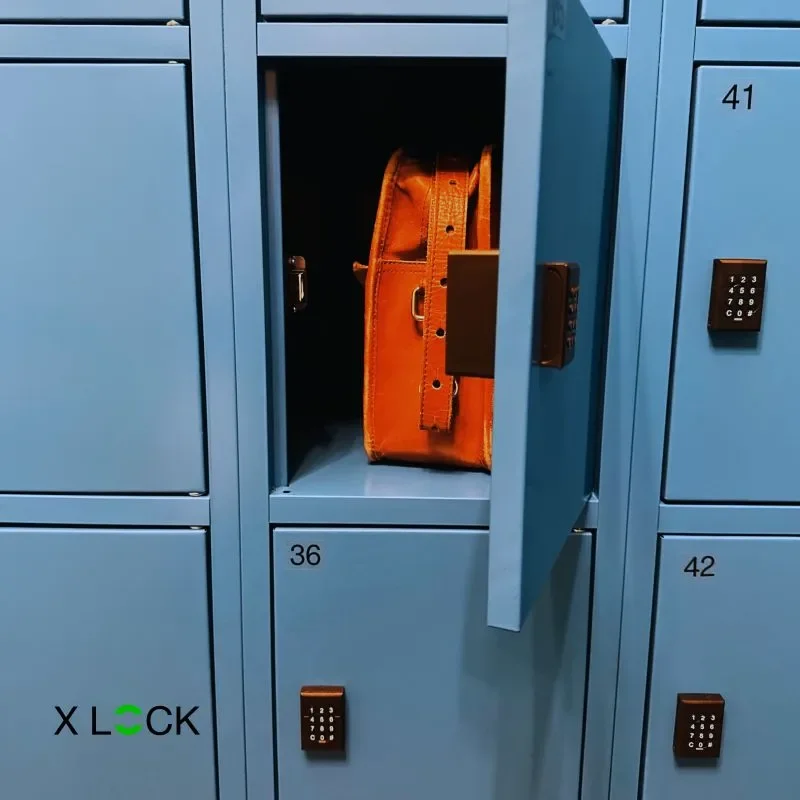
Remove assigned desks and you immediately need to answer the question: where do people put their things? Personal lockers are non-negotiable in a true ABW setup, and they’re often under-specified. Aim for lockers that accommodate a laptop bag and a coat — shallow lockers designed for A4 documents aren’t sufficient.
Position lockers near entrances or team neighbourhoods so staff aren’t carrying kit across the floor. Combination locks or digital access are preferable to physical keys in a multi-shift or hybrid environment.
The Welltek approach: At Welltek Group, we believe smart storage should be simple, secure, and flexible enough to support the demands of modern hybrid workplaces. That’s why we work with intelligent locker systems such as XLOCK, which combine sleek, minimal design with advanced access technology including NFC cards, PIN codes, smartphone access, and fingerprint recognition. Easily managed through a central app, the system allows organisations to control permissions, monitor usage, remotely manage lockers, and adapt access instantly as teams change — creating a more seamless and efficient workplace experience without the hassle of traditional keys
Putting it together: a practical ABW ratio
As a rough starting point, a hybrid ABW office for a team of fifty working across three days a week might include:
25–30 task positions (a mix of sit-stand and standard desks) in quiet focus zones
4–6 acoustic pods (mix of solo and two-person configurations)
2–3 enclosed meeting rooms for four or more people
Modular collaborative seating for 15–20 people across two or three zones
Social seating for 15–20 in a breakout area
Personal lockers for all 50 staff
This isn’t a formula — it’s a starting point for a conversation about how your team works. The best ABW layouts come from observation and iteration, not from copying a diagram.
The cost question: subscriptions, rental, and remanufacturing
One of the biggest barriers to ABW adoption isn’t design uncertainty — it’s the upfront cost of fitting out multiple different zones with quality furniture. The economics of ABW furniture look very different when you approach them as a service rather than a capital purchase.
Welltek Group offers three models that directly address this:
Furniture on subscription — access to task chairs, desks, and other furniture on a monthly basis, with the flexibility to scale up, scale down, or swap products as your needs change. Subscription removes the depreciation risk and the replacement headache, and makes budgeting predictable.
Chair and desk remanufacturing — Welltek takes quality second-hand or end-of-lease furniture and restores it to full working specification. The result is ergonomically and aesthetically equivalent to new, at a fraction of the price and with a substantially lower environmental impact. For businesses with sustainability targets, this is a meaningful contribution — not a compromise.
Office pod rental — pods on a flexible rental basis, ideal for businesses trialling ABW, managing headcount uncertainty, or looking to avoid large capital commitments. Rental also means Welltek handles maintenance and servicing.
Used in combination, these three models make it possible to create a genuinely well-specified ABW environment — acoustic privacy, quality ergonomics, flexible collaboration spaces — without the capital outlay that has historically made ABW the preserve of large corporations.
Activity-based working works when the furniture genuinely supports the range of activities people need to do — and not when it’s just a cost-cutting exercise dressed up in design language.
That’s the promise of ABW.
Welltek Group works with businesses across the UK to design, supply, and manage office furniture for activity-based working environments. Whether you’re looking to rent pods, subscribe to ergonomic seating, or remanufacture existing stock, get in touch to talk through what’s right for your space.
